How to fit out a building without closing it
Hotels selling rooms, care homes with residents in bed, a service floor with ninety staff at their desks. What it actually takes to build around a live operation.
By Dave Groom · Tatton Projects
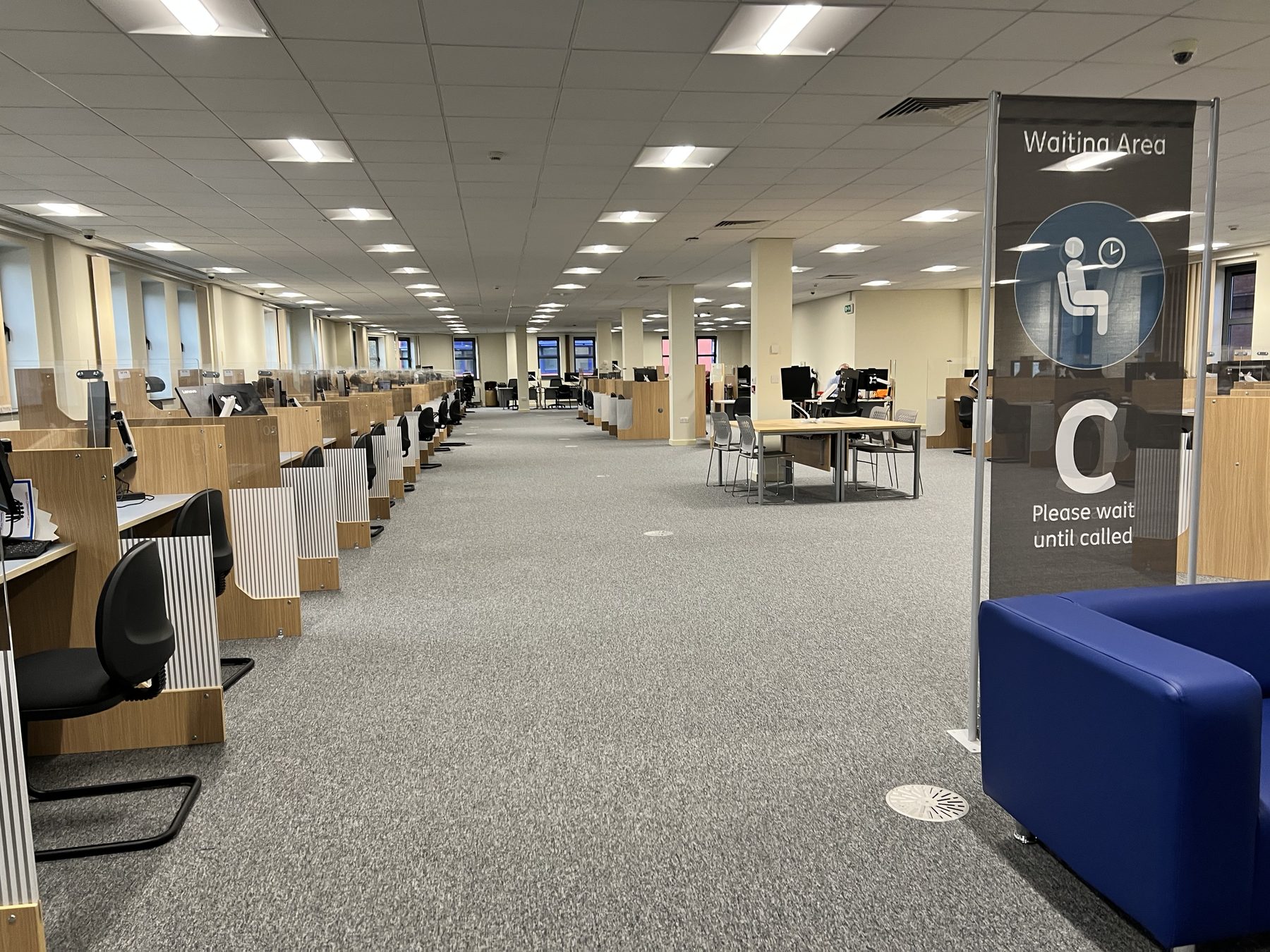
The question I get asked most often by commercial clients is not about price. It is: can you do this without shutting us down?
The answer is almost always yes, and it is most of what we do. But it changes how the job is built, and it needs to be planned in from the first appraisal rather than bolted on later.
What actually changes
The programme runs backwards. On an empty floor you sequence by trade — strip out, then services, then partitions. In an occupied building you sequence by zone, and each zone has to come back into use complete. That means services, partitions, ceilings, power and data all landing in the same small area before you move on.
The noisy work moves. Core drilling, cutting, anything that carries through structure — that goes out of hours. Which means the programme has to be costed with out-of-hours labour in it from the beginning.
Separation is not optional. Dust, noise, route and fire separation between the works and the operation has to hold every single day. Not most days.
Fire strategy stays live throughout. This is the one that catches people. Escape routes, alarm coverage and compartmentation must be maintained at every stage of the works, not just at handover.
What it looks like in practice
We fitted out a large public-facing service centre in Stockport with over ninety staffed positions. The building never closed. The public came through the doors every day of the programme.
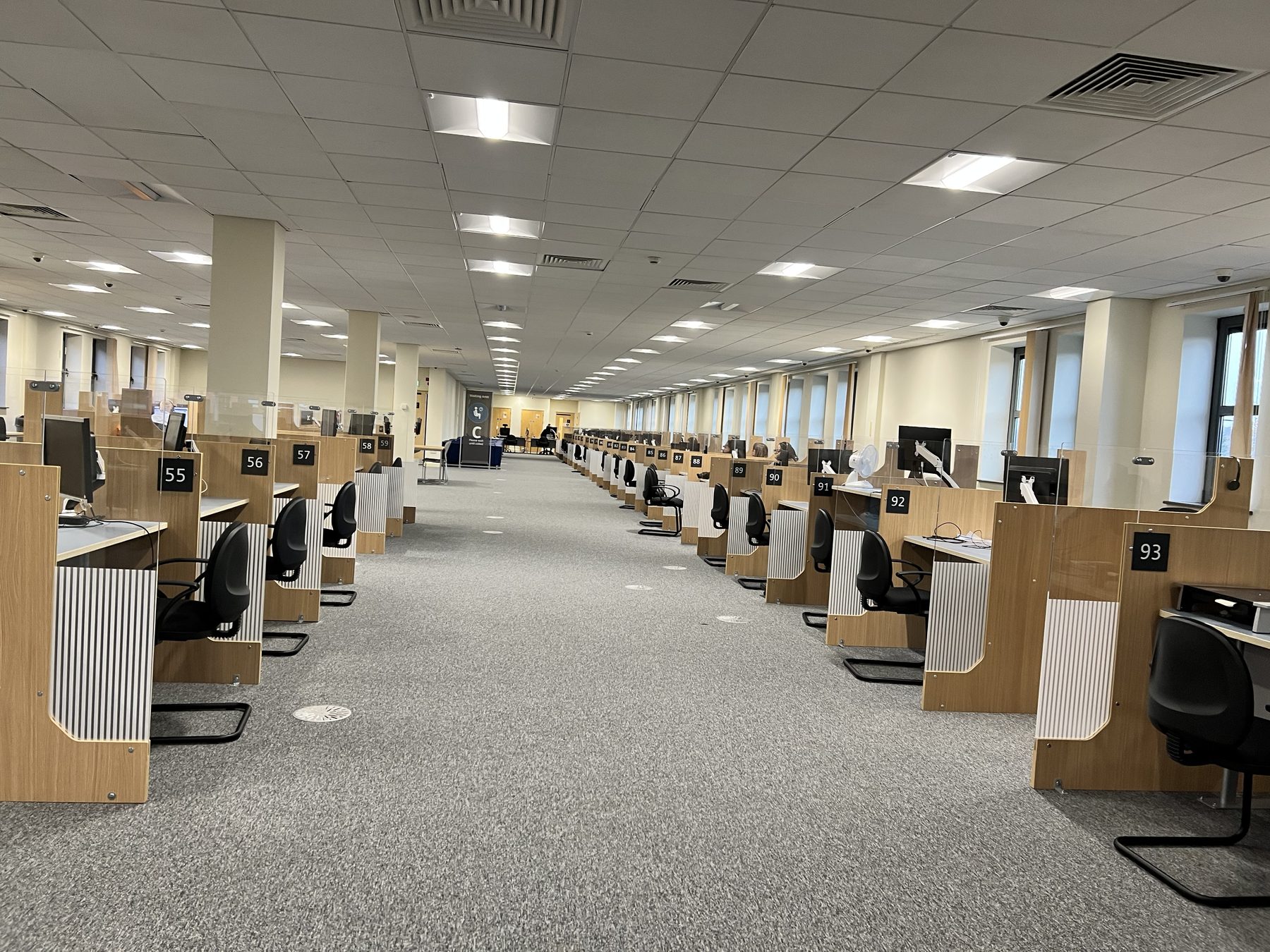
Ninety-plus service positions, brought back online in batches
Positions came back online in batches — powered, cabled, screened and tested before anyone sat down at them. Heavy work ran outside opening hours. The separation between the works and the public held for the whole job.
We have done the same in hotels that kept selling rooms, in care homes with residents in the rooms next door, and in retail units inside malls that traded throughout.
A care home is the hardest version of this. Residents are elderly, often frail, frequently unsettled by change — and they live there. Everything is phased, everything is sealed, and noise is confined to windows in the day when people are up.
What to ask a contractor
If you are getting quotes for work in an occupied building, ask these:
- How will you sequence the handbacks, and what is complete at each stage?
- What work is out of hours, and is that in your price or is it a variation?
- How is the fire strategy maintained during the works?
- Who is on site managing the separation day to day?
If they cannot answer clearly, the price is not comparable to one from someone who can.
Got a project like this?
Feasibility, cost plan, or a straight answer on whether a building is worth taking.