Living at home during an extension: how to make it work
Most of our clients stay at home while we build. How to plan a temporary kitchen, contain the dust, handle service shutdowns and keep everyone talking.
By Dave Groom · Tatton Projects
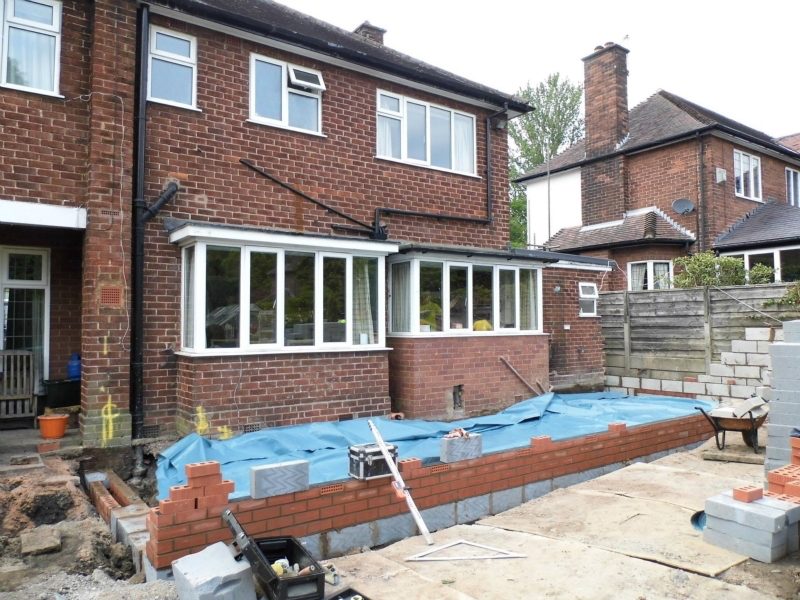
Most of our clients stay at home while we build their extension. It works, but it works because it's planned from the start, not because everyone grits their teeth and hopes for the best.
This is what I'd talk through with any family planning to live in through the works.
The kitchen, the services and the noisy days
On a lot of extensions the kitchen is the room being extended or knocked through, so you'll lose it for part of the job. Set up a temporary kitchen somewhere else in the house before that happens. It doesn't need to be much: a fridge, a kettle, a microwave, a plug-in hob or slow cooker, and a sink if you can manage one. A utility room is perfect if you have one.
Ask your builder two things early: how long the old kitchen can stay in use, and when the new one is due to be fitted and working.
With the usual sequence, the extension shell is built and made weathertight before the old back wall comes out. That keeps the house closed, and the old kitchen usable, for as long as possible.
At some point the water, the power and the heating will each be off for a while, usually to make connections into the new extension. On a well-run job these are planned, and you're told in advance rather than on the morning.
The days you'll notice most are the breakthrough, the steelwork going in and anything involving a disc cutter. If anyone works from home, plan those days around them.
Winter is harder. Once the back wall is out, the house is open to a new space that isn't heated yet, and keeping it warm can need temporary heating or a temporary screen.
Keeping the dust on the right side
There's no such thing as a dust-free building site inside a house, and I won't pretend otherwise. What you can do is keep it contained.
- Sealed dust screens between the works and the rest of the house, taped at the top, bottom and sides, with a zipped door rather than a loose sheet
- Floor and stair protection on any route the trades have to use
- A separate way in for the trades, usually round the side of the house, so nobody carries a bag of plaster through your hall
- Doors kept shut to rooms you're not using, and anything precious moved or covered before the dusty work starts
Dust follows the air. If a screen isn't sealed at the top, the bottom and both sides, it isn't really a screen.
Cutting, sanding and the breakthrough are the dustiest stages. If you're planning to go away at any point during the job, ask when they'll fall.
Children, pets and next door
Children. A site has open trenches, scaffolding, skips and tools. The working area should be fenced or locked off, and children need to know clearly where they can't go.
Pets. Doors get left open, there are people in and out all day and the noise is constant. Cats get out and dogs get anxious. Keep them well away from the working area, and make sure the trades know they're there.
Security and insurance. Tell your home insurer before work starts. While the back of the house is open, it needs securing every night.
Neighbours. Tell them before you start, because skips, deliveries, parking and noise affect them too. If the work is on or near the boundary, party wall notices may need serving before anything starts.
Keeping everyone talking
A lot of the friction on a lived-in job comes from not knowing what's happening tomorrow.
- One person to talk to. At Tatton, the person who prices the job is the person who runs it on site, so you're not passing messages along a chain.
- A regular catch-up at a set time, with a walk round and a look at what's coming next.
- A list of decisions and when they're needed: tiles, sockets, kitchen layout, door handles. Late decisions are one of the easiest ways for a job to slip.
- Changes agreed in writing, with a price, before they're carried out.
The same principles apply to commercial jobs where the building can't close, and there's more on that in how to fit out a building without closing it.
If you're planning to stay put
Tell us at the start that you'll be living in, along with who's at home, any pets and how you use the house day to day. We'll plan the phasing, the temporary kitchen and the dust separation into the programme and the price from the start, rather than finding them halfway through. There's more on what extensions cost in what a house extension actually costs, and on how we work on our extension builders in Altrincham page.
Got a project like this?
Feasibility, cost plan, or a straight answer on whether a building is worth taking.