CDM 2015 for homeowners: who is responsible for safety on your job?
How the CDM 2015 regulations apply to work on your own home, where the client duties go, who the principal designer and contractor are, and what to expect.
By Dave Groom · Tatton Projects
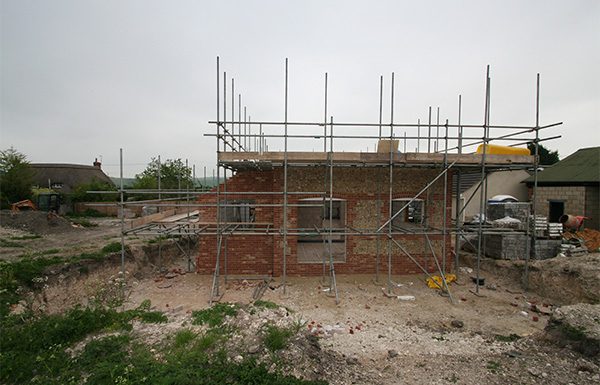
CDM 2015 sounds like something for office blocks and motorway bridges. It isn't only that. The Construction (Design and Management) Regulations 2015 apply to construction work of every size, including work on people's own homes.
The good news for homeowners is that most of the duties don't land on you. What matters is knowing where they do land, and making sure someone has actually picked them up.
This is a plain-English summary, not legal advice. The Health and Safety Executive publishes guidance for domestic clients on its website, and it is worth a read.
Are you a domestic client?
Under CDM, a domestic client is someone having construction work done on their own home, or the home of a family member, that isn't connected with a business.
That covers most extensions and refurbishments to the house you live in. It doesn't cover a landlord doing up a property to let, or a developer building to sell. They are commercial clients, and the client duties stay with them.
Where your duties go
Every client has duties under CDM: making suitable arrangements for managing the project, making sure the right people are appointed, and providing information. For a domestic client, the regulations pass those duties to someone else.
- One contractor. If only one contractor works on the project, the client duties pass to that contractor.
- More than one contractor. A principal designer and a principal contractor must be appointed. If you don't appoint them in writing, the designer in control of the pre-construction phase becomes the principal designer, and the contractor in control of the construction phase becomes the principal contractor. The client duties pass to the principal contractor.
- By agreement. You can instead agree in writing that the principal designer takes on the client duties.
One practical point. If you employ trades directly, say a builder for the shell, your own electrician and a separate kitchen fitter, you have more than one contractor. Make sure everyone knows who the principal contractor is.
You don't have to manage safety on your own extension. You do need to know who is, and it should be written down.
The paperwork to expect
A construction phase plan. Every project needs one before the construction phase starts. On a house extension it can be short and practical: who is in charge, the site rules, welfare arrangements, the main hazards such as excavations, working at height and demolition, and how the site is kept separate from the family.
Pre-construction information. Whoever holds the client duties should gather what is known about the house: drawings, surveys, services and anything hazardous. If your house was built before 2000, asbestos is a possibility, and it needs to be identified before walls and ceilings are opened up. Tell your contractor anything you know.
A health and safety file. On projects with more than one contractor, the principal designer prepares a file of information that will be useful for future work on the building, and it is handed to you at the end. Keep it with the deeds. Whoever works on the house next will be glad of it.
Notification to the HSE. Larger projects have to be notified to the HSE before work starts. The test is whether the construction work will last more than 30 working days with more than 20 workers on site at the same time at any point, or will exceed 500 person days. Many domestic jobs fall below that, but a big whole-house project can cross it. On a domestic project, it is for the contractor or principal contractor to deal with.
Designers have duties too. Your architect and engineer should be thinking about how what they draw can be built, used and maintained safely, not leaving it all to the builder.
Living next to a building site
Plenty of people stay at home during an extension, and that is where CDM stops being paperwork. The construction phase plan should say where the site ends and the house begins, how deliveries and skips are handled, how scaffolding and excavations are made safe out of hours, and how children and pets are kept out. There is more on the day-to-day side in living at home during an extension.
A note on names. Since 2023 the Building Regulations have had their own principal designer and principal contractor roles, introduced under the Building Safety Act. They share names with the CDM roles but do a different job, which is making sure the work complies with the Building Regulations. Often the same people fill both, but they are two separate sets of duties.
Who does what on our jobs
On a domestic project where we are the only contractor or the principal contractor, the client duties under CDM are ours, and we treat them as part of the job: the construction phase plan, the site set-up, the welfare and the coordination of everyone on site. We are members of the Federation of Master Builders, hold Constructionline Gold, and are CITB and CSCS accredited.
If you're planning an extension or a new home, send us the drawings. Along with the price, we'll tell you who will hold which duties before anything starts on site. More on our work is on the extension builders in Altrincham and new build homes in Cheshire pages.
Got a project like this?
Feasibility, cost plan, or a straight answer on whether a building is worth taking.