Snagging an extension: what to check before the final payment
A room-by-room snagging checklist for a finished extension, what practical completion means, how retention works, and the certificates you should collect.
By Dave Groom · Tatton Projects
The last few weeks of an extension are when patience runs thinnest on both sides. The client has lived with dust for months and wants their house back. The builder wants to finish and be paid. A clear snag list, walked together, is what gets everyone over the line without falling out.
Practical completion and snagging
Practical completion is the point at which the work is finished and you can use it, with only minor defects left. Snags are those defects: a door that catches, a missed patch of paint, a run of sealant that wants redoing.
Under many building contracts, practical completion matters for more than the snag list. It can be the point at which responsibility for insuring the works passes back to you, a defects period starts, and any retention is partly released. What it triggers depends on your contract, so read that clause before the day.
Walk it room by room
Do it in daylight, with the lights on as well, and take your time. Look at walls and ceilings with the light raking across them, because that is when uneven plaster shows.
Inside
- Walls and ceilings: paint coverage, cracks at corners and junctions, uneven plaster
- Doors: open and close cleanly, latch properly, even gaps all round
- Windows and sliders: open, close and lock, run smoothly, keys handed over
- Floors: level where rooms meet, no hollow-sounding tiles, consistent grout and joints
- Kitchen: doors and drawers aligned, appliances working, worktop joints and sealant tidy
- Electrics: every socket, switch, light and extractor fan working
- Heating: every radiator or underfloor zone warming up and controllable
- Plumbing: hot and cold where they should be, wastes draining freely, no drips under sinks
Outside
- Roof edges, flashings and rooflights neat and sealed
- Gutters and downpipes connected and discharging where they should
- Brickwork or render clean, pointing complete
- Thresholds draining properly, with ground and paving kept below the damp-proof course
- Air bricks and vents clear
- Garden and paths made good to whatever was agreed
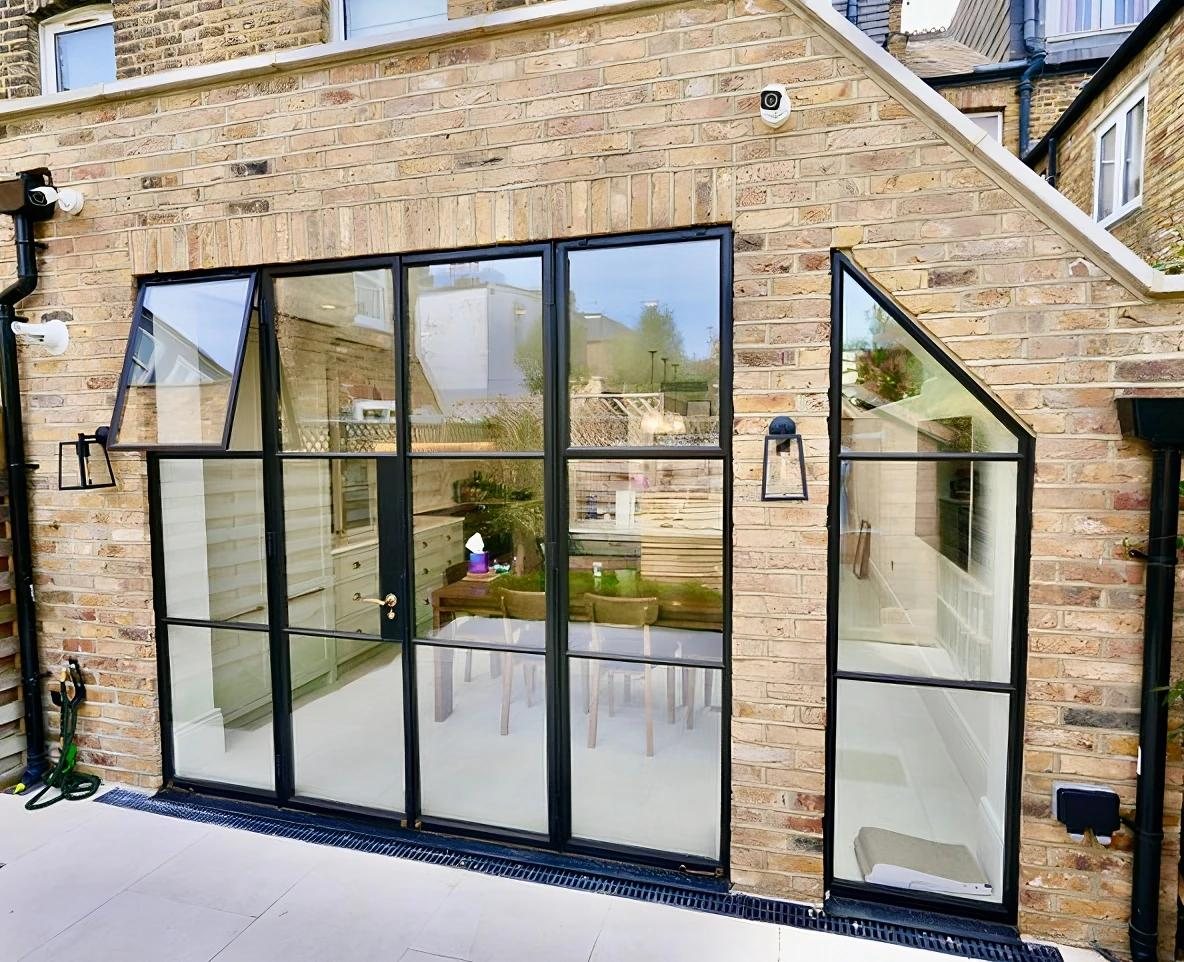
Didsbury: the crittall-style screen onto the garden, with a drainage channel along the threshold
Expect a few fine cracks over the first heating season as new plaster and timber dry out. That's normal, and it's why decorating touch-ups are often left until the end of the defects period.
The paperwork that should come with the keys
The snag list isn't finished until the paperwork is. Depending on the job, you should end up with:
- The building control completion certificate, or a final certificate from a private approver
- An electrical installation certificate for the new and altered circuits
- Gas Safe and commissioning paperwork, if the boiler or heating has changed
- A certificate for any unvented hot water cylinder fitted
- Certificates for replacement windows elsewhere in the house, where applicable
- The water company's sign-off, if the extension was built over a public sewer
- Guarantees and manuals for the roof covering, glazing, appliances and heating
If there was a party wall award, the surveyors will often want to check the neighbour's property against the schedule of condition at the end.
There is more on the inspections behind that completion certificate in what building control inspects on an extension, and on sewers in build-over agreements explained.
Pay for the work that's done, and hold back a fair amount for what isn't. Withholding the whole final payment over a sticking door doesn't help anyone.
Retention and the final payment
Some contracts hold back a small percentage of each payment, called retention, and release it in stages, typically part at practical completion and the rest at the end of the defects period. Many domestic contracts don't use retention, and the final payment does a similar job. Check which yours is.
Either way, the fair approach is the same. Agree the snag list in writing. Agree when each item will be done. Hold back an amount that genuinely reflects the outstanding work, and release it when the work is done. Holding back far more than the snags are worth sours the end of a job, and it may not be what your contract allows.
Anything that shows up after you've moved back in, like a door that swells in damp weather or a crack that opens up, goes on a list for the defects period rather than a phone call every time.
How we finish a job
The person who prices our jobs is the person who runs them, so the snag walk is done with someone who knows every decision made along the way. You can see finished extensions, and what they came to, on our work page.
If you're planning an extension, send us the drawings. You'll get a straight answer on price and programme from the person who would be on site. More on how we work is on our extension builders in Altrincham page.
Got a project like this?
Feasibility, cost plan, or a straight answer on whether a building is worth taking.