Buying a building plot in Cheshire: what to check before you offer
The checks to make on a building plot in Cheshire before you offer: planning, conditions, services, access, ground, trees, covenants and the title.
By Dave Groom · Tatton Projects
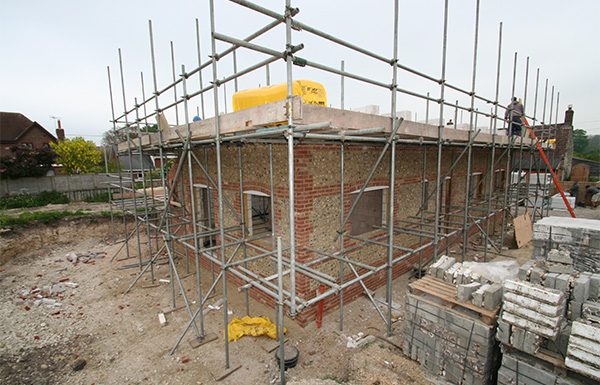
The price of a building plot is set by what can be built on it and what it will cost to get there. The selling agent will tell you plenty about the first half. The second half is down to you, and it's far cheaper to find out before you offer than after you've exchanged.
These are the checks I'd make on any plot in Cheshire or Greater Manchester. Your solicitor will handle the formal searches, but a lot of what follows is physical, and it's worth a builder's eye as well as a lawyer's.
Planning: what has actually been granted
Read the decision notice and the approved drawings yourself, not the agent's description of them.
- Outline or full. Outline permission establishes the principle of a house on the site. The details, such as layout, appearance and scale, still need approval through reserved matters. Full permission approves a specific design. If you want a different house from the one approved, you'll need a new application or an amendment, and there's no guarantee you'll get it.
- The expiry date. Permissions lapse if work hasn't started in time. For a full permission it's usually three years from the decision, but the notice will state the date that applies.
- Conditions. Some conditions have to be discharged before any work starts, typically things like drainage, materials, levels or tree protection. Starting without discharging them can leave the permission exposed, so allow time for those applications.
- Obligations. Check for a Section 106 agreement and whether the council charges the Community Infrastructure Levy. CIL exemptions for self-builders exist, but they have to be applied for before work starts.
If the plot has no permission, you are buying a possibility rather than a plot, and the price should reflect that. Much of the countryside around Wilmslow, Knutsford, Prestbury and Alderley Edge is Green Belt, where new houses are tightly restricted. The council's local plan and its pre-application advice service are the places to start.
Services and access
Utilities. Find out where the nearest electricity, water and, if you want it, gas connections are, and get quotes from the providers early. On a rural plot a long connection run can cost far more than people expect.
Drainage. Find out whether there's a public sewer within reach, and at a depth that lets the house drain to it by gravity. If not, you'll need a pump or a treatment plant, and discharging treated water has its own Environment Agency rules. Surface water will usually need a soakaway, which only works if the ground drains. If a public sewer crosses the plot, read our post on build-over agreements.
Access. Check that the plot meets the public road directly, rather than across a strip of land owned by someone else. That strip, often called a ransom strip, can cost the owner of the plot dearly. If access is over a private drive, check the right of way covers a new house and construction traffic, and that the visibility at the junction can be achieved without land you don't own.
The ground, the trees and what lives there
A plot is worth what can be built on it, less what it costs to get there. The second half never appears in the brochure.
A site investigation, with trial pits or boreholes, tells you what the foundations will need to be. Clay, soft ground, made-up ground from previous uses and high water tables all push the cost up. Depending on where the plot is, a mining or brine search may be relevant, and your solicitor will know which searches apply.
Trees matter twice. A Tree Preservation Order or a conservation area can restrict what you remove, and on clay soils trees near the house, including neighbours' trees and ones recently felled, can mean much deeper foundations. A tree survey early on saves a redesign later.
Check the Environment Agency's flood maps, look for overhead lines and sewers crossing the plot, and walk the slope. An ecology survey may be needed too, particularly if there are old buildings that could hold bats, or ponds nearby.
The title and the small print
Get the title register and title plan from HM Land Registry. Title plans usually show general boundaries rather than exact ones, so walk the boundary with the plan in your hand and see whether the fences agree with it.
Then read what's on the title:
- Restrictive covenants, such as a limit of one house on the land, or a requirement for someone's consent before you build
- Easements and rights of way, both the ones you need over other land and the ones neighbours have over yours, such as a drain or a footpath
- Overage or clawback, where a previous owner takes a share of any future increase in value
Your solicitor will advise on what each one means legally. What I look for is what each one means on site: where you can dig, where the drive can go, and whether the house on the drawings actually fits.
Before you make an offer
Work out the build cost before you agree the land price, not after. A plot is only good value if the house you want can be built on it for a sum that makes sense.
Send us the location and the title plan, and within five working days you'll get a free site appraisal covering what the land is worth and what it would cost to build out. Our post on residual land value explains how the land figure is worked out, and more about how we build one-off houses is on our new build homes in Cheshire page.
Got a project like this?
Feasibility, cost plan, or a straight answer on whether a building is worth taking.